
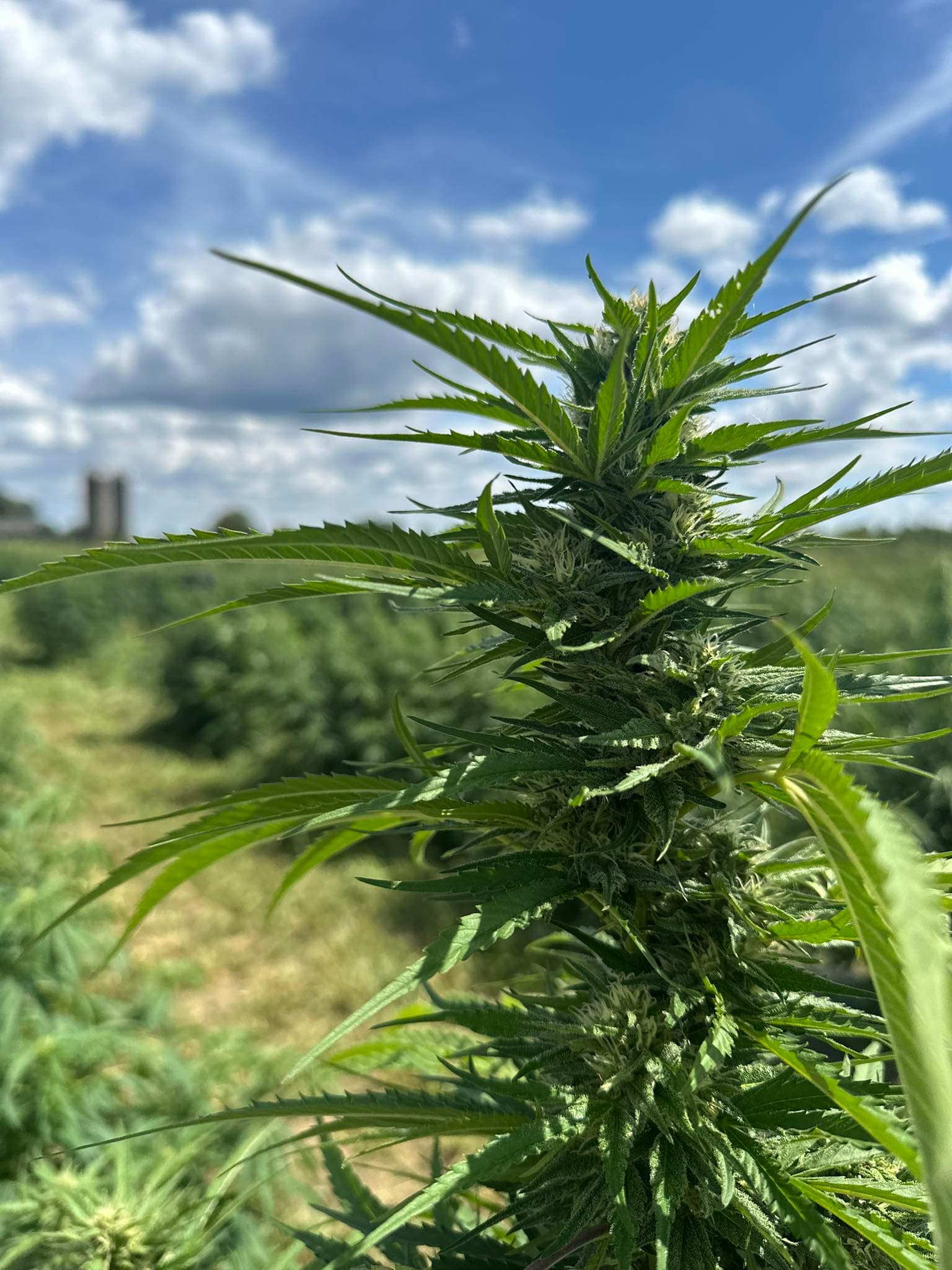
What is CBG? The Complete Guide to Cannabigerol
CBG is the parent cannabinoid — the compound every other cannabinoid starts as. Non-psychoactive, smokable as flower, and federally legal. Here's everything you need to know.
Last updated: March 2026
The short answer
CBG stands for cannabigerol. It is a naturally occurring cannabinoid found in the hemp plant. It is non-psychoactive — meaning it does not produce intoxication — and it is federally legal under the 2018 Farm Bill when derived from hemp. You can smoke it, vaporize it, or use it in a pipe, exactly like cannabis flower. You just will not get high.
If that sounds like an odd product, it is worth understanding what CBG actually is and why people seek it out. The answer has to do with how cannabinoids are made in the first place.
The parent cannabinoid explained
Inside every hemp plant, a compound called CBGA (cannabigerolic acid) is produced first. CBGA is the biosynthetic precursor to essentially every other cannabinoid you have heard of. As the plant matures, enzymes convert CBGA into THCA (which becomes THC), CBDA (which becomes CBD), CBCA, and others. By the time a typical hemp or cannabis plant reaches harvest, the vast majority of its CBG has already converted into these downstream compounds.
To produce a high-CBG strain, farmers have to intervene — either by harvesting early before full conversion, or by selectively breeding strains that retain CBG at maturity. This is why CBG flower has historically been rare and more expensive than CBD flower. Modern breeding programs, including the work done at farms like Lifestyle Family Farms in Michigan, have changed that by developing stable high-CBG cultivars that can be harvested at full maturity.
The term "parent cannabinoid" refers to this upstream relationship: CBG is where the cannabinoid story starts, before the plant splits into CBD, THC, and everything else.
CBG vs. CBD vs. THC: the key differences
These three are often conflated, especially by people new to hemp. A quick comparison:
| Property | CBG | CBD | THC |
|---|---|---|---|
| Psychoactive | No | No | Yes |
| Federally legal (hemp-derived) | Yes | Yes | No (>0.3%) |
| Available as flower | Yes | Yes | State-dependent |
| Common character | Calm focus, clear-headed | Relaxing, sometimes sedating | Euphoric, intoxicating |
| Rarity in plant | Rare (1–4% typical) | Abundant | Abundant (in cannabis) |
The CBG in Sober Sativas flower runs between 11–14% depending on the strain — significantly higher than what you would find in a typical hemp plant, achieved through selective breeding at the farm level.
What CBG flower feels like
Individual experiences with any cannabinoid vary based on your body chemistry, your history with cannabis, your tolerance, and how you consume it.
What users consistently report with CBG flower:
- A sense of calm that does not feel sedating — clear-headed rather than foggy
- A noticeable but subtle shift in mental state — described by many as "taking the edge off" without impairing function
- A smoking experience that closely mirrors cannabis in ritual and flavor, without the high
- A lighter, cleaner aroma — more herbal and floral, less pungent
CBG may support relaxation and a sense of calm. It is not a pharmaceutical. If you are managing a health condition, speak with a physician.
How CBG flower is grown
CBG flower is grown using the same cultivation methods as CBD hemp — outdoor or greenhouse, soil-based, harvested and dried like any other hemp flower. The difference is genetic: the plant has been bred to retain high CBG content through maturity rather than converting it all to CBD or THC.
Because CBG-dominant genetics are relatively recent in the modern hemp breeding cycle, quality variation is high. What to look for when sourcing CBG flower:
- A Certificate of Analysis (COA) from a third-party accredited lab confirming the CBG percentage and THC compliance
- A named strain with documented cannabinoid profile
- Visible trichome density — CBG-rich flower produces a sticky, frosted appearance
- A distinct, fresh aroma — not like hay or dried grass
Sober Sativas sources from Lifestyle Family Farms in Grass Lake, Michigan. Every batch ships with a third-party COA available on our Compliance page.
CBG flower legality
CBG flower derived from hemp with less than 0.3% delta-9 THC is federally legal under the 2018 Farm Bill.
CBG also has a structural compliance advantage under the new federal hemp regulations (P.L. 119-37, effective November 2026), which establish a 0.4mg total THC cap per product. Because CBG is naturally ultra-low in total THC, CBG flower remains compliant where many full-spectrum CBD products will not.
State-level legality varies. See our complete state-by-state legal guide.
Who CBG flower is for
- Tolerance break smokers — keep the ritual while your THC tolerance resets
- Cigarette quitters — zero nicotine, zero THC, same hand-to-mouth ritual
- Sober-curious consumers — feel something without the fog or the legal complications
- Wellness seekers — exploring the broader cannabinoid spectrum beyond CBD
Frequently asked questions
Why is CBG called the parent cannabinoid?
Because CBGA (the acidic form of CBG) is the biosynthetic precursor to all major cannabinoids. Harvest early and CBG remains; let it mature and it converts into CBD, THC, and others.
Is CBG the same as CBD?
No. They are chemically distinct with different effects and growing profiles. See our full CBG vs CBD comparison.
Will CBG flower get me high?
No. CBG is non-psychoactive. Our flower contains less than 0.3% delta-9 THC by dry weight.
Is CBG flower legal?
Yes, federally, under the 2018 Farm Bill. State-level restrictions apply in some states. See our legal guide.
How do I use CBG flower?
In a pipe, rolled in papers, or in a dry herb vaporizer. Vaporizing at lower temperatures (<375°F / 190°C) preserves terpenes and cannabinoids for a cleaner experience.
Ready to try CBG flower?
Grown at Lifestyle Family Farms in Michigan. Third-party lab tested. Ships to most U.S. states.