
Best CBG Flower 2026: A Buyer's Guide
The CBG flower market is still young. Quality varies wildly, pricing is all over the map, and many brands do not disclose basic information like farm sourcing or complete lab results. This guide evaluates six brands on the criteria that actually matter — potency, lab testing, price per gram, farming practices, and transparency — so you can make an informed decision instead of a hopeful one.
Last updated: April 2026
What to look for in CBG flower
Before comparing brands, you need to know what separates good CBG flower from mediocre product sitting in a warehouse. These are the six criteria we use — and the ones you should apply to any brand you consider, including ours.
- CBG percentage (10% or higher): CBG-dominant flower should test at 10% CBG by dry weight at minimum for meaningful effects. Below that, you are paying for flower with a cannabinoid profile closer to industrial hemp than a purpose-bred CBG cultivar. The best strains test between 11 and 16%.
- Third-party COA (non-negotiable): A Certificate of Analysis from an ISO 17025-accredited lab is the only proof that a product contains what the label claims. It should be batch-specific, recent, and include both potency and safety panels (pesticides, heavy metals, microbials, mycotoxins). If a brand does not publish COAs, do not buy from them.
- Farming practices: How the hemp was grown matters. Organic farming methods, no synthetic pesticides, proper soil management, and responsible drying and curing all affect the final product. Brands that can name their farm and describe their cultivation practices earn more trust than those that cannot.
- Total THC compliance: The 2018 Farm Bill sets the federal limit at 0.3% delta-9 THC by dry weight. P.L. 119-37, effective November 2026, introduces a 0.4mg total THC cap per product unit. CBG flower is naturally ultra-low in THC and clears both thresholds easily, but you should verify this on the COA for any product you purchase.
- Price per gram: Packaging sizes vary (1/8 oz, 1/4 oz, ounces, pre-rolls), so the only fair comparison is cost per gram. At daily use, the difference between $3/g and $7/g adds up to roughly $120 per month. We break this down for every brand below.
- Strain variety and transparency: Does the brand tell you which cultivar you are buying? Do they describe its characteristics? A brand that lists a strain name, its cannabinoid profile, and its intended use (daytime focus vs. evening relaxation) is giving you information. A brand that just says "CBG flower" is not.
Scoring methodology
We score each brand on five weighted criteria. The weights reflect what matters most to a daily CBG user making a purchasing decision. Lab testing carries the highest weight because without verified results, nothing else on this list can be trusted.
| Criterion | Weight | What We Evaluate |
|---|---|---|
| Lab Testing | 25% | Batch-specific COAs, ISO 17025 lab, full panel (potency + safety), publicly accessible |
| Potency | 20% | CBG percentage by dry weight, consistency across batches, cannabinoid profile clarity |
| Price | 20% | Cost per gram at the most common purchase size (1/8 oz), volume discounts, overall value |
| Farming Practices | 20% | Named farm source, organic or pesticide-free methods, cultivation transparency, single-source vs. aggregated |
| Transparency | 15% | Strain names and descriptions, cannabinoid data on product pages, compliance documentation, supply chain disclosure |
Every brand below is scored out of 10 in each category, then weighted. The final score is a composite out of 10. We apply the same criteria to ourselves that we apply to competitors — no thumb on the scale.
Brand reviews
Six brands, evaluated against the same five criteria. We are one of them. We have done our best to represent each brand fairly based on publicly available information at the time of writing. Pricing and product availability may change — always check the brand's website for the most current information.
1. Sober Sativas
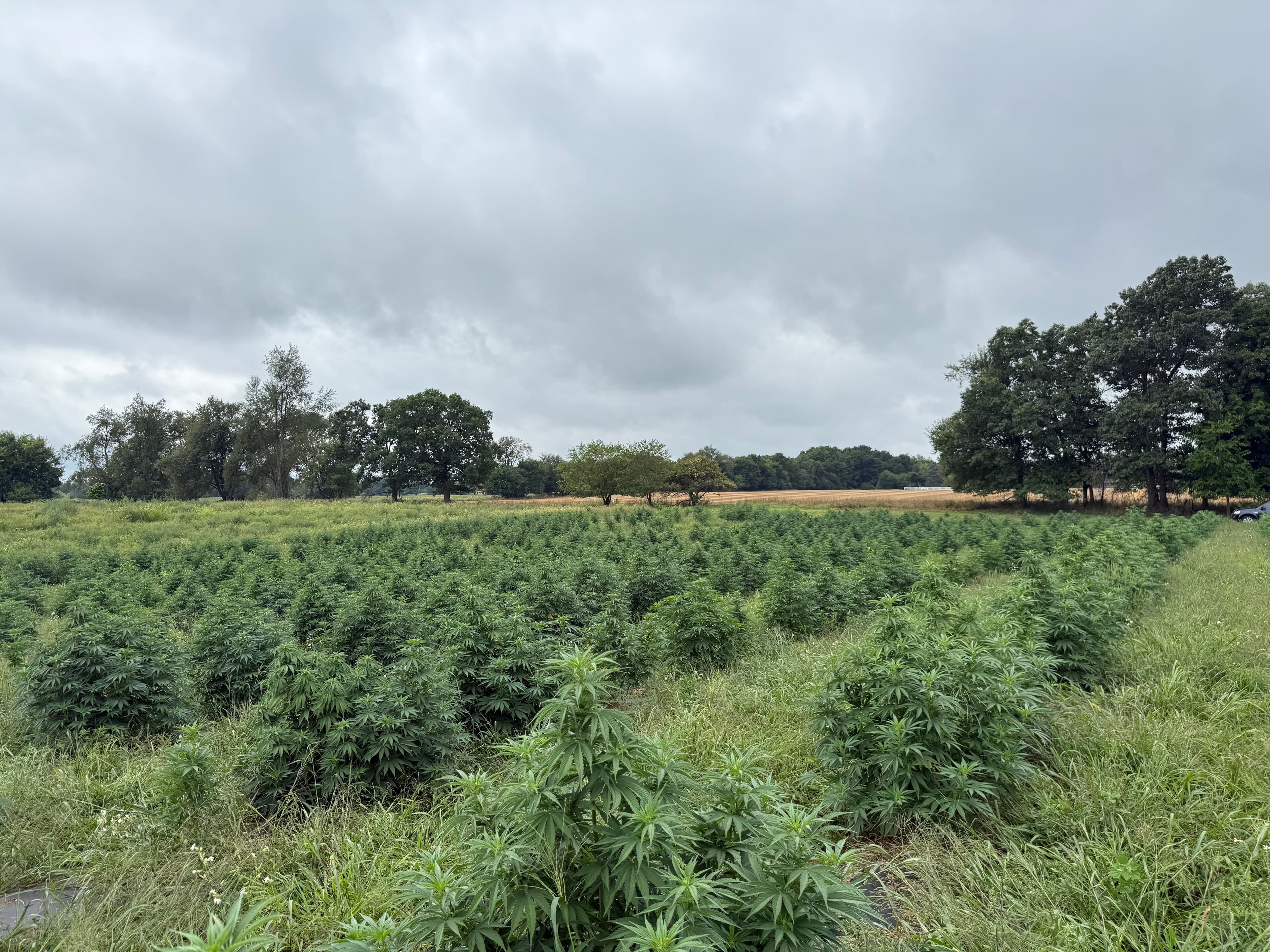
That's us. Sober Sativas is a CBG flower brand under the Total Hemp Consumables umbrella. All of our flower comes from a single source: Lifestyle Family Farms in Grass Lake, Michigan. We currently offer two strains — Stem Cell (11–14% CBG, bred for daytime clarity and focus) and The White (a premium cultivar positioned for evening use and deeper relaxation).
Pricing starts at $12 for a 1/8 oz of Stem Cell ($3.43/g) and drops to $1.93/g at the full ounce ($55). The White is our premium line: $18 for a 1/8 oz ($5.10/g), scaling down to $2.82/g at the ounce ($80). Every batch ships with a third-party COA. Farm sourcing, compliance documentation, and lab results are publicly available on our Compliance page.
- Potency: 11–14% CBG (Stem Cell). Solid for the price point.
- Lab Testing: Batch-specific COAs from independent third-party labs. Full panel testing. Publicly accessible.
- Price: $3.43/g (1/8 oz) to $1.93/g (1 oz) for Stem Cell. One of the lowest price floors in the market.
- Farming: Single-source, named farm (Lifestyle Family Farms, Grass Lake, MI). No intermediary. Farm-to-shelf supply chain.
- Transparency: Strain names with descriptions, full cannabinoid data, farm photos, compliance page.
Strengths: Lowest price floor in this comparison, full supply chain transparency, named single-source farm, comprehensive COA program.
Weaknesses: Newer brand with a smaller track record. Only two strains currently available — limited selection compared to more established competitors. No retail presence outside the website.
2. Organic Green Roots
Organic Green Roots is an Oregon-based hemp flower brand with a focus on organic growing practices. They are one of the more recognized names in the CBG space and typically offer CBG strains testing in the 12–15% range. At the time of writing, pricing runs approximately $4–5 per gram depending on the size purchased.
- Potency: Typically 12–15% CBG. Consistent and competitive.
- Lab Testing: Third-party COAs available. Generally includes potency and safety panels.
- Price: Approximately $4–5/g at the time of writing. Mid-range for the market.
- Farming: Oregon-grown. Markets organic practices and their certification is a differentiator in a market where many brands make vague claims.
- Transparency: Good product descriptions with strain information and COA access.
Strengths: Organic certification (one of the few brands that can actually substantiate this claim), good reputation in the hemp community, consistent CBG percentages.
Weaknesses: Higher price point than some competitors. If budget matters for daily use, the premium adds up.
3. Green Unicorn Farms
Green Unicorn Farms is a Vermont-based hemp flower company that has built a strong reputation for overall quality across their CBD and CBG product lines. They typically offer one or more CBG-dominant strains alongside a broader selection of CBD flower. Pricing tends to sit in the $4–6 per gram range at the time of writing.
- Potency: CBG strains typically test in a competitive range, though the exact percentage varies by harvest and cultivar.
- Lab Testing: Third-party COAs published on product pages. Generally thorough.
- Price: Approximately $4–6/g. Premium positioning.
- Farming: Vermont-grown. Good climate for hemp cultivation. Farm details are communicated through branding.
- Transparency: Detailed product pages with terpene profiles, strain descriptions, and clear COA links. Well above average for the industry.
Strengths: Wide strain selection, established brand with loyal customer base, high production quality, good terpene documentation.
Weaknesses: Premium pricing. CBG is not always their primary focus — CBD flower is a larger part of their catalog, which means fewer CBG-specific options than a dedicated CBG brand.
4. Tweedle Farms
Tweedle Farms is one of the oldest names in online hemp flower. Based in Oregon, they have been selling hemp flower since the early days of the post-Farm Bill market. Their catalog is broad — CBD flower, CBG flower, pre-rolls, and hemp-derived products. CBG strains are available but represent a smaller slice of their overall offering. Pricing at the time of writing tends to be competitive, approximately $3–4 per gram.
- Potency: CBG strains typically test in a competitive range. The exact percentage varies by cultivar and harvest cycle.
- Lab Testing: COAs available. Tweedle Farms has been publishing lab results since early in their operation.
- Price: Approximately $3–4/g. One of the more competitive price points in this comparison.
- Farming: Oregon-grown. Established cultivation infrastructure. Details on specific farm practices are less prominently featured than some competitors.
- Transparency: Product descriptions and COAs available, though the site experience prioritizes breadth of catalog over deep strain-level detail.
Strengths: Long track record, competitive pricing, broad product catalog, established logistics and shipping infrastructure.
Weaknesses: CBG is not their primary focus. When a company sells dozens of products across multiple cannabinoid types, the depth of attention to any single category can be thinner. Farm sourcing details are less prominently featured.
5. Cannaflower
Cannaflower positions itself as a premium hemp flower brand with curated strain selections and polished presentation. They offer CBG strains alongside a broader CBD flower lineup. Pricing reflects the premium positioning — typically $5–7 per gram at the time of writing. The brand invests heavily in packaging, photography, and editorial content.
- Potency: CBG strains are available, though CBG percentage varies by cultivar. Generally competitive with the broader market.
- Lab Testing: COAs available on the website. Lab testing appears thorough.
- Price: Approximately $5–7/g. The highest per-gram cost of the non-pre-roll brands in this comparison.
- Farming: Sources from partner farms. Specific farm details are less prominently disclosed than single-source brands.
- Transparency: Excellent product presentation and strain descriptions. The editorial and educational content on the site is above average.
Strengths: Best-in-class branding and packaging. If presentation and the unboxing experience matter to you, Cannaflower delivers. Strong editorial content. Curated selection feels intentional rather than bloated.
Weaknesses: Highest price per gram in this comparison (excluding pre-roll-only brands). The premium is largely a branding premium — you are paying for the experience, which may or may not matter depending on your priorities.
6. Dad Grass
Dad Grass is a lifestyle brand first and a hemp flower brand second. They are best known for their pre-rolled joints, retro branding, and cultural positioning — the "your dad's weed" aesthetic. They offer CBG+CBD blends rather than pure CBG flower, and the product is primarily available as pre-rolls. Pricing at the time of writing runs approximately $10–15 per gram when calculated from pre-roll pricing, making them the most expensive option in this comparison by a significant margin.
- Potency: CBG+CBD blends rather than pure CBG. The CBG concentration in blended products is lower than a dedicated CBG strain.
- Lab Testing: COAs available. Testing practices appear standard.
- Price: Approximately $10–15/g (from pre-roll pricing). Significantly above market rate.
- Farming: Sources from partner farms. Specific cultivation details are not a central part of their brand narrative.
- Transparency: Strong brand storytelling, but less emphasis on strain-level cannabinoid data and farm sourcing specifics than flower-focused brands.
Strengths: Outstanding brand identity. Retail distribution in physical stores, which is rare for hemp flower. The lifestyle appeal brings new people into the category who might not otherwise try hemp.
Weaknesses: Very expensive per gram — three to four times the cost of comparable flower from other brands. Blends rather than pure CBG flower, which means less CBG per gram. Not designed for the daily user who prioritizes value.
Comparison summary
All six brands side by side. Pricing and CBG percentages are approximate and based on publicly available information at the time of writing. Always check the brand's website for current pricing.
| Brand | CBG % | Price/g | COA | Farm Source | Notable Strength |
|---|---|---|---|---|---|
| Sober Sativas | 11–14% | $3.43 (1/8) | Full panel, public | Lifestyle Family Farms, MI | Lowest price + named farm |
| Organic Green Roots | 12–15% | ~$4–5 | Available | Oregon | Organic certification |
| Green Unicorn Farms | Varies | ~$4–6 | Available | Vermont | Strain variety + quality |
| Tweedle Farms | Varies | ~$3–4 | Available | Oregon | Track record + pricing |
| Cannaflower | Varies | ~$5–7 | Available | Partner farms | Branding + packaging |
| Dad Grass | Blend (CBG+CBD) | ~$10–15 | Available | Partner farms | Lifestyle brand + retail |
Why price per gram matters
CBG flower is best used consistently, not occasionally. Most daily users consume between half a gram and one gram per day. At that rate, the per-gram price is not a minor detail — it is the single biggest factor in your monthly cost.
Here is the math. At one gram per day:
| Price per Gram | Monthly Cost (30 days) | Annual Cost |
|---|---|---|
| $2/g (volume pricing) | $60 | $730 |
| $3.50/g (mid-range) | $105 | $1,278 |
| $5/g (premium) | $150 | $1,825 |
| $7/g (high premium) | $210 | $2,555 |
| $12/g (lifestyle brands) | $360 | $4,380 |
The difference between the cheapest and most expensive options in this guide is over $3,600 per year — for the same cannabinoid. This does not mean the cheapest option is always the best. Lab testing, farming practices, and potency all factor in. But if two brands score similarly on quality and one costs twice as much, that matters.
Volume discounts also matter. Most brands, including Sober Sativas, offer progressively lower per-gram pricing at larger quantities. Buying an ounce instead of an eighth can cut your per-gram cost by 40–50%. If you know you are going to use CBG daily, buying larger saves real money.
Our transparent take
We are a competitor in this list. That is worth acknowledging directly.
Sober Sativas is listed alongside five other brands in a buyer's guide published on the Sober Sativas website. We are not pretending to be a neutral third-party review site. We built this comparison because we believe our product holds up under honest scrutiny — and because we think the CBG market needs more transparency, not less.
Here is what we are not going to do: exaggerate our strengths or minimize our competitors. Every brand on this list does something well. Organic Green Roots has a certification most brands cannot match. Green Unicorn Farms has built a quality reputation over years. Tweedle Farms has been doing this longer than almost anyone. Cannaflower's presentation is genuinely excellent. Dad Grass has brought hemp flower to people who would never have tried it otherwise.
Here is what we acknowledge about ourselves: we are a newer brand. We only have two strains. We do not have years of customer reviews or the retail distribution of a lifestyle brand. What we do have is a named farm, a transparent supply chain, aggressive pricing, and full lab documentation on every batch.
We wrote this guide because the question "what is the best CBG flower?" deserves a real answer, not a listicle full of affiliate links. If you choose a competitor after reading this, that is fine — you will be better informed either way. If you want to try ours, the store is right here.
How to verify any brand yourself
You do not need to take our word for it — or anyone's. Here is a quick checklist you can apply to any CBG flower brand before purchasing.
- Find the COA: Navigate to the product page or compliance section. Can you find a batch-specific Certificate of Analysis? Is it from an ISO 17025-accredited lab? Does it include both potency and safety panels?
- Check the CBG percentage: Does the COA confirm the CBG percentage claimed on the product page? Is it 10% or higher?
- Calculate the price per gram: Divide the price by the weight in grams (1/8 oz = 3.5g, 1/4 oz = 7g, 1/2 oz = 14g, 1 oz = 28g). Compare across brands at the same quantity.
- Ask about the farm: Can the brand tell you where the hemp was grown? A specific farm, state, and growing method? Or is it vague language like "premium hemp flower" with no source identified?
- Check THC compliance: Verify that delta-9 THC is below 0.3% on the COA. Also check total THC — with P.L. 119-37 effective November 2026, the 0.4mg total THC cap is worth verifying proactively.
- Read the safety panels: Pesticides, heavy metals, microbials, and mycotoxins should all be tested and pass. A potency-only COA is incomplete.
For a detailed walkthrough of every section of a COA, see our full guide: How to Read a Certificate of Analysis.
Frequently asked questions
What is CBG flower?
CBG (cannabigerol) flower is raw hemp bud bred to contain high concentrations of CBG rather than CBD or THC. It is non-psychoactive, federally legal under the 2018 Farm Bill, and typically tests between 10 and 16 percent CBG by dry weight with delta-9 THC well below the 0.3% federal limit.
Does CBG flower get you high?
No. CBG does not bind to CB1 receptors the way delta-9 THC does, which means it produces no psychoactive high. Federally compliant CBG flower contains less than 0.3% THC — far too low to cause intoxication.
How should I evaluate CBG flower quality?
Focus on five things: CBG potency (10% or higher), third-party lab testing with a full Certificate of Analysis, farming practices (organic methods, named farm source), total THC compliance, and price per gram. A trustworthy brand makes all of this publicly available.
Is CBG flower legal to buy online?
In most states, yes. CBG flower derived from hemp with less than 0.3% delta-9 THC is federally legal under the 2018 Farm Bill. A small number of states restrict smokable hemp — check your state's laws before ordering. CBG flower also clears the upcoming 0.4mg total THC cap under P.L. 119-37 (effective November 2026).
Why does price per gram matter for CBG flower?
At daily use, small price differences compound fast. A $3/g brand costs roughly $90/month while a $7/g brand costs $210/month — a $120 difference for the same cannabinoid. Price per gram is the only fair comparison because packaging sizes vary across brands.
Try Sober Sativas CBG flower
Farm-direct from Lifestyle Family Farms, Grass Lake, Michigan. Full COAs on every batch. Starting at $3.43/g for Stem Cell — one of the lowest prices in the market for independently tested CBG flower.