
Will CBG Show on a Drug Test?
The direct answer: CBG itself is not tested for on any standard drug panel. But that is not the whole story. CBG flower is hemp, and hemp contains trace amounts of THC. If you are subject to drug testing, you deserve the full picture — not reassurance, but honest information.
Last updated: April 2026
What drug tests actually look for
Standard workplace drug tests do not test for "cannabis." They test for a specific metabolite: THC-COOH (11-nor-9-carboxy-delta-9-tetrahydrocannabinol). This is the compound your liver produces when it breaks down delta-9 THC.
CBG (cannabigerol) is a completely different molecule from THC. When your body metabolizes CBG, it does not produce THC-COOH. There is no metabolic pathway from CBG to the compound that drug tests detect. CBG is not on the SAMHSA 5-panel, the DOT 5-panel, or any standard 10-panel or 12-panel test.
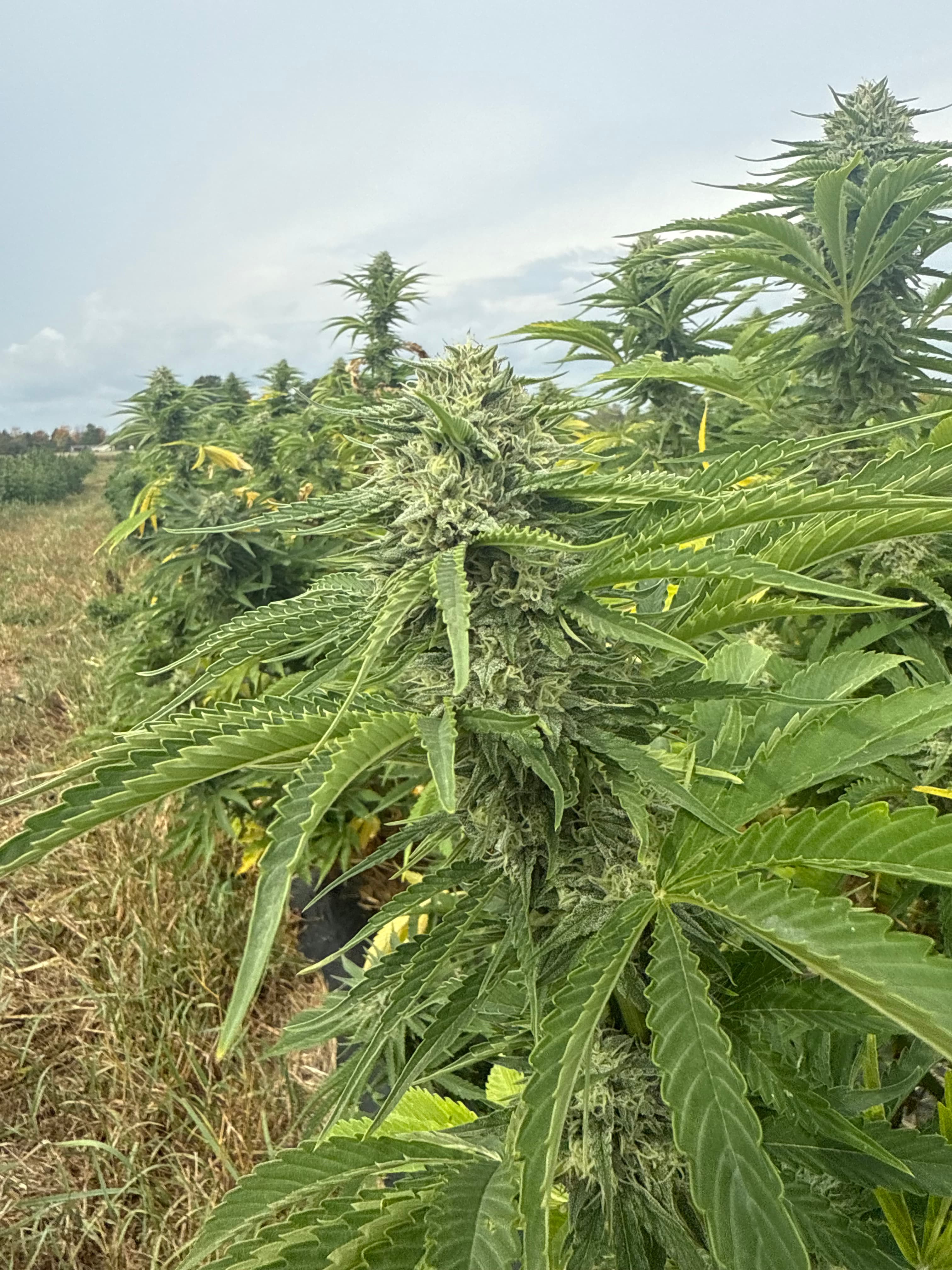
So why is this article necessary? Because CBG flower is not pure CBG. It is hemp — a whole plant product that contains a full spectrum of cannabinoids, including trace amounts of delta-9 THC.
How the two-step testing process works
Most workplace drug testing follows a two-step protocol established by SAMHSA (Substance Abuse and Mental Health Services Administration):
Step 1: Immunoassay screening. This is a rapid, inexpensive test that uses antibodies to detect THC-COOH. The federal cutoff is 50 ng/mL. If your urine sample is below this concentration, you pass. The test stops here. Immunoassays have a known cross-reactivity issue — they can occasionally produce false positives from structurally similar compounds — but CBG is not known to cross-react at clinically significant levels.
Step 2: GC-MS or LC-MS/MS confirmation. If the immunoassay is positive, the sample goes to a second test using gas chromatography-mass spectrometry (GC-MS) or liquid chromatography-tandem mass spectrometry (LC-MS/MS). This is highly specific — it identifies the exact molecule present. The confirmation cutoff for THC-COOH is 15 ng/mL. There is no ambiguity at this stage: either THC-COOH is present at or above 15 ng/mL, or it is not.
The real risk: trace THC in hemp flower
Federally compliant hemp flower contains up to 0.3% delta-9 THC by dry weight. Our CBG flower from Lifestyle Family Farms typically tests well below this limit — exact numbers are on the batch-specific Certificate of Analysis available on our compliance page.
But "below 0.3%" is not "zero." If you smoke one gram of hemp flower containing 0.2% THC, you are consuming approximately 2mg of delta-9 THC. For reference, a typical THC edible dose is 5-10mg. One gram of CBG flower is a fraction of that — but it is not nothing.
THC-COOH is fat-soluble and accumulates in adipose tissue. With regular use, even small amounts of THC can build up. The half-life of THC-COOH in urine is estimated at 1.3 days for infrequent users and up to 5-13 days for chronic users. This means daily consumption of CBG flower could, over time, push THC-COOH levels toward the detection threshold.
Factors that affect your risk
Not everyone who smokes CBG flower faces the same level of drug test risk. The key variables:
- THC content of your specific flower. Check the COA. A flower testing at 0.05% total THC poses far less risk than one at 0.28%. This is the single most important variable and the reason third-party lab testing matters.
- Consumption frequency and volume. Smoking one small bowl on a Saturday night is a very different exposure profile than smoking multiple grams daily for weeks. The more frequent and heavier your use, the more THC metabolite accumulates.
- Body fat percentage. THC-COOH is lipophilic — it stores in fat cells. Individuals with higher body fat may retain metabolites longer than leaner individuals, even at the same consumption level.
- Metabolism and hydration. Faster metabolism and adequate hydration support more rapid clearance. This is not something you can meaningfully game in the short term — "detox drinks" are largely unsubstantiated.
- Time since last use. Infrequent users may clear trace THC-COOH within 3-5 days. Regular users may need 1-2 weeks or more. These are estimates, not guarantees.
How to minimize your risk
If you are subject to drug testing and want to use CBG flower, here is the practical harm-reduction approach:
- Always check the COA. Read the Certificate of Analysis for your specific batch. Look at the total THC line — not just delta-9, but total THC (which includes THCa that converts to THC when heated). Our COAs are available on the compliance page.
- Moderate your consumption. Less flower means less trace THC. If you are smoking daily, you are accumulating more metabolite than someone who smokes once or twice a week.
- Build in buffer time. If you know a test is coming, abstain for at least 5-7 days if you are a light user. Heavy users should allow longer. This is not a guarantee — it is risk reduction.
- Consider a home test kit. Over-the-counter THC urine test strips (available at most pharmacies) use the same 50 ng/mL immunoassay cutoff as workplace screening. Testing yourself before a scheduled test gives you real data about your current level.
- Be honest with yourself. If your career, custody case, or parole depends on passing a drug test, even the small risk from trace THC in hemp flower may not be worth it. We would rather lose a sale than see you lose a job.
Why COAs matter more than brand promises
Any hemp company can claim their product is "THC-free" or "will not show on a drug test." What matters is the lab data. A Certificate of Analysis from an accredited, independent third-party laboratory tells you:
- The exact CBG percentage (potency verification)
- The total THC level (the number that matters for drug testing)
- Whether delta-9 THC is below the 0.3% federal limit
- Contaminant screening: pesticides, heavy metals, microbials
Every batch of Sober Sativas flower from Lifestyle Family Farms comes with a batch-specific COA. We do not aggregate results across batches. Each harvest is individually tested. You can review them on our compliance page. For more on reading and understanding COAs, see our guide on how to read a Certificate of Analysis.
CBG vs THC: the drug test contrast
For context, here is how the drug test risk compares between CBG flower and THC cannabis:
| Factor | CBG Flower | THC Cannabis |
|---|---|---|
| Tested for directly? | No | Yes (THC-COOH) |
| Contains THC? | Trace (<0.3%) | 15-30%+ typical |
| Risk of positive test | Low (not zero) | Very high |
| Detection window after single use | Likely undetectable | 3-10 days |
For a full comparison of CBG and THC beyond drug testing, see our CBG vs THC guide.
Frequently asked questions
Will CBG make me fail a drug test?
CBG itself is not detected by drug tests. The risk comes from trace THC in hemp flower. For most casual users, the risk is very low. For heavy daily users, trace THC metabolites can accumulate. If your career depends on passing, weigh the risk carefully and check your flower's COA.
Do drug tests test for CBG?
No. Standard 5-panel, 10-panel, and DOT tests screen for THC-COOH only. CBG is a structurally different cannabinoid and is not a target analyte on any standard panel.
How much CBG flower would I need to smoke to fail a drug test?
There is no universal answer. It depends on the flower's THC content, your frequency of use, body fat, and metabolism. Check the COA, moderate your consumption, and consider home testing if you are concerned.
How can I reduce my risk of failing a drug test from CBG flower?
Check the COA for total THC content. Moderate your consumption frequency. Allow buffer time before known tests. Consider over-the-counter home test kits for peace of mind.
What is a COA and why does it matter?
A Certificate of Analysis is a third-party lab report showing the exact cannabinoid content and safety screening of a specific batch of flower. It tells you exactly how much THC you are consuming — the single most important variable for drug test risk. See our compliance page for our current COAs.
Transparency you can verify
Every batch of Sober Sativas CBG flower comes with a third-party Certificate of Analysis. Know exactly what you are consuming.